
Only this afternoon I was driving past a garden that was full to bursting with Blue Hydrangeas. The sweeping bank that wrapped around the driveway was a sea of blue. The garden was large and could easily carry it off. How I wish I'd had my camera with me to get a shot. It was a sight for sore eyes let me tell you.
For a moment or two I had a slight pang of regret at having gave away my Hydrangeas last year. When I got home, I realised that my garden was not completely void of blue. There's lots of blues that I suppose aren't really blue if you want to get down to the nitty gritty but I'm not one for getting into the nitty gritty of such things, life's just too short!
Two blue plants that grow in my garden are really not for me, if I'm honest! I just get the benefit of the flowers. I grow these especially for the cats. One of my cats is particularly possessive over his catmint. He goes to all sorts of lengths to stop his brothers or neighbouring cats getting their paws on it. Here's a picture taken last year, I had just planted it and had a good old chew before I gave it some protection. You can actually see the loving and longing in his eyes or is it that's he's just high! More likely the later.
 |
| Titch looking admiringly at a newly planted Nepeta |
Tip - For those that find cats destroy catmint - protecting the crown of the plant with an upturned wire hanging basket like this is great. It prevents the cats from rolling on the crown and killing the plant. It does look a little odd until the plants fills out and disguises the wires.
The dry sunny weather has done wonders for the catmint this year. Nepeta grandiflora Blue Danube - is a nice compact variety and thanks to the wire basket, remains very upright. This is the same plant as above one year on.

Another catmint, a taller more vigorous variety Nepeta Six Hills Giant. It can be rather floppy in the conditions in my garden but the wire basket just helps it stay a tad more erect but small enough to keep the arching habit the plant has naturally. The fact that Nepeta is popular with the bees is another good reason to grow at least one of these in the garden, providing you have a good spot for it that is.
 |
| Nepeta Six Hills Giant |
 |
| Buddleia davidii Blue Empire and Eristalis tenax |
 |
| Unknown blue hardy Geranium and Aconitum Stainless Steel |
 |
| Brunnera macrophylla Jack Frost |
A new blue I've introduced to the garden this summer was a bit of an impulsebuy to tell you the truth. Once I got them home I really did struggle to find them a home. I found the dark blue quite intense and it clashed with almost everything I placed it beside. However, after reading they are short lived (expensive lesson!) I decided that I'd give them a go beside Primula vialii, which is also quite fussy but reliably perennial here in my garden for the past 3 years. So if it's to come back, this could well be the ideal spot. |
| Primula capitata noverna Deep Blue |
 |
| Geranium Pratense Black Beauty and Geranium sanguineum |
 |
| Hosta Aureomarginata |
 |
| Salvia x sylvestris Blue Queen and Clematis The Vagabond |
 |
| Blue Agapanthus |
 |
| Eryngium bourgatii Graham Stuart Thomas |
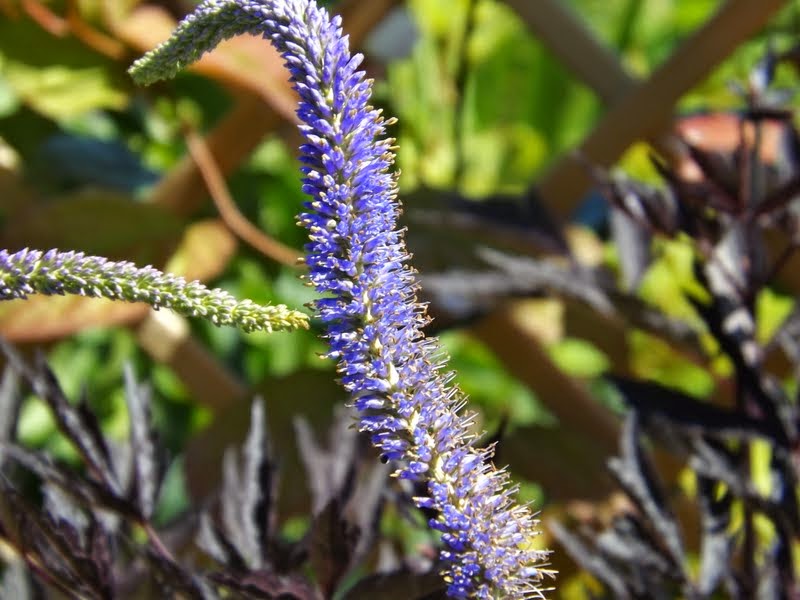
The bendy blue racemes of Veronicastrum virginicum Apollo fascinate me. No two flowers bend the same way. This North American native makes a nice statement in any border. Despite the fact it is not a native and blue, it still attracts plenty of pollinators. Except when I have the camera out that is!
Flowers aren't the only blues right now. Mahonia, The Oregon Grape (you can see why it got it's common name) is abundant with blue/purple berries or should that be grapes? Either way, they make a nice statement on their own. This year was the first it had flowered in 3 years, therefore the first time I've had berries. Whether or not they are eaten by the birds remains to be seen.
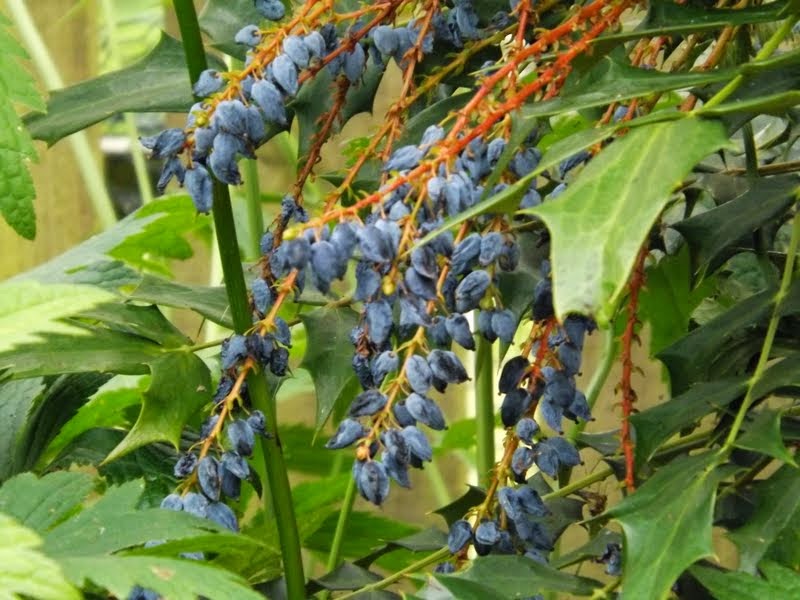 |
| Mahonia x media Charity |
 |
| Abies koreana Silberline |
 |
| Clematis Rhapsody |
I hope the weather has been kind to you all this weekend, as it has here. Long may it continue!
 |
| Shades of Blue |
